May 20th | 2 Films
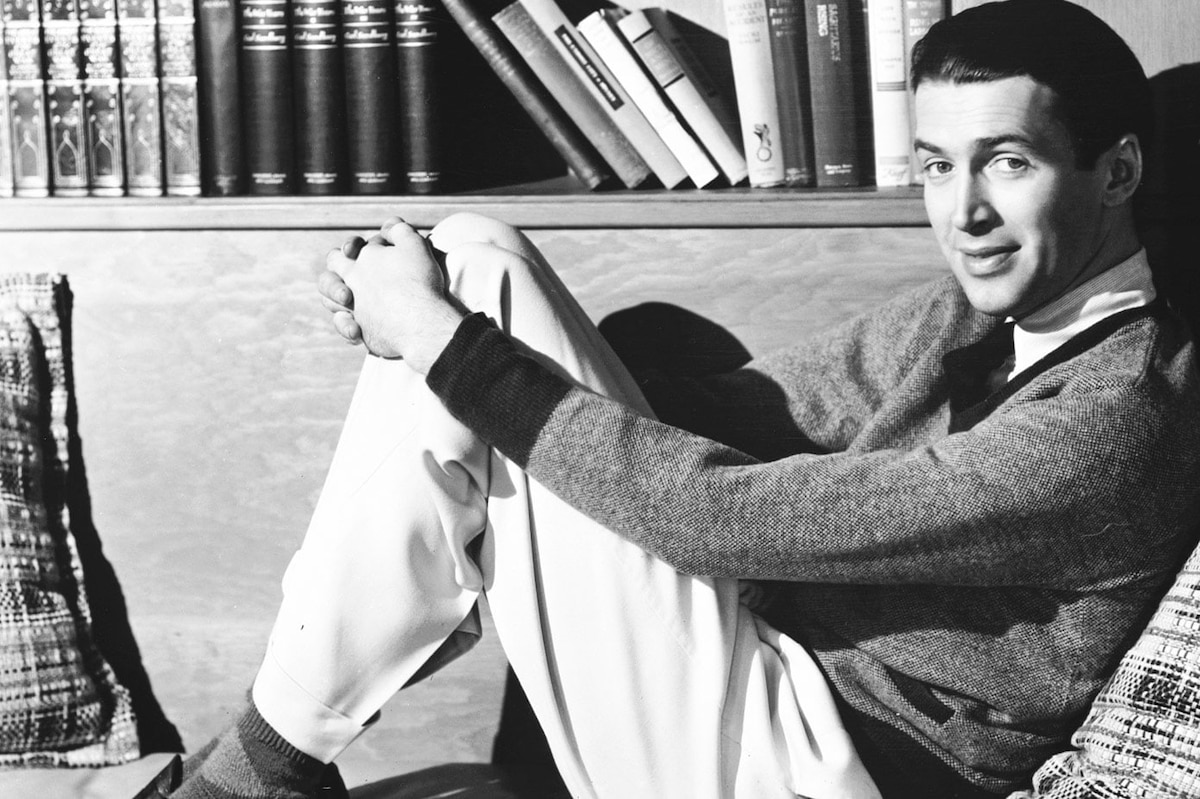
115 years ago today, the man that the American Film Institute named the third greatest actor of Hollywood’s Golden Age was born. James Stewart, typically called Jimmy, was a luminary performer of his time. He wasn’t a man of a thousand faces, though, instead, Stewart was a man with one, indelible All-American face. It was a face that could convey almost any emotion, and over the course of his career Stewart lent his face to drama, thrillers, comedies, westerns and just about every other genre imaginable. At the height of his career, Stewart was one of the most reliable box office draws in the country, appearing on the theater owner’s list of bankable actors 22 times over 30 years.
He was tall, gangly and, when he was drafted into the U.S. Army in 1940, Stewart had to gain five pounds before the military would accept him. By that point, Stewart’s thin stature had already made a large-scale impact in Hollywood, becoming one of the great stars in MGM’s stable. The Pennsylvania native had come up through summer stock theater and Broadway. He made his film debut in The Murder Man in 1935 and was quickly cast in a series of supporting roles, including in high-profile productions like Wife vs. Secretary (1936) and After the Thin Man (1936).
MGM first gave Stewart star-billing in 1936 with his role in Speed. The Last Gangster (1937) and Vivacious Lady (1938) followed. What really brought Stewart into the zeitgeist, however, were a pair of collaborations with Frank Capra for which he was loaned to Columbia, You Can’t Take It With You (1938) and Mr. Smith Goes to Washington (1939), which earned him his first nomination for the Academy Award for Best Actor. With these films, his “awe shucks” persona was cemented, and, alongside Gary Cooper, the ultimate Capra leading man. He would win the Academy Award for Best Actor for his turn in The Philadelphia Story (1940), which cast him opposite Katharine Hepburn and Cary Grant. His win is largely credited to a “drunk scene” he has with Hepburn, which is considered an essential moment in the screwball comedy genre.
In 1939, he teamed with Claudette Colbert in a comedy, It’s a Wonderful World. The movie took a page from the successful Thin Man series with a mystery element. The story concerns a private eye (Stewart), and through a series of only-in-a-screwball events, he must kidnap Colbert. Like most of his movies of the period, the film performed well.
While he only worked once with Colbert, Stewart made several films with Margaret Sullavan, the ex-wife of his good friend Henry Fonda. Their sentimental Ernst Lubitsch holiday comedy The Shop Around the Corner (1940) remains a Christmas favorite, and The Mortal Storm (1940) adapts the best-selling book of the same title by Phyllis Bottome for the big screen. It’s a bold movie for Hollywood in 1940, making a defiant anti-Nazi statement as the film chronicles the impact of Adolf Hitler’s rise and the effect it has on “non-Aryans” (code for “Jew”).
Films like this spoke to the patriotic Stewart’s heart and he served in the army with honors, becoming a one-star brigadier general over the course of his years in the military. By the time Stewart returned home, he was a different man, and his films largely took on a darker tone. The first movie back from World War II for both Stewart and Capra was It’s a Wonderful Life (1946), the perennial holiday classic that, prior to its famed feel-good ending, brings Stewart’s George Bailey to the brink of suicide. Stewart’s acting depth is on full display as George prays to God in an extended close-up while surrounded by bar patrons. He asks God to “show me the way,” and in the scene Stewart allows every ounce of horror he saw in the war show through his face. The movie earned Stewart another Oscar nomination.
His choices remained interesting after It’s a Wonderful Life, including a quartet of collaborations with director Alfred Hitchcock, each of which showed a different side to Stewart. In Rope (1948), he’s hell-bent on seeing justice for a friend he begins to believe was murdered. The extended-takes of the movie called upon his training as a theatrical performer. In Rear Window (1954), he’s again in detective mode, confined to a wheelchair and struggling with the age-old idea of “settling down” as he’s romanced by Grace Kelly. In The Man Who Knew Too Much (1956), his son (with Doris Day) has been kidnapped, and he’s doing anything he can to get his son back. Vertigo (1958) deals squarely with obsession, as Stewart tries to remake Kim Novak into the object of a seemingly lost love.
He stayed dark in some of the 1950s edgiest dramas, in particular Anatomy of a Murder (1959), which scored him his final Academy Award nomination, where he plays an attorney involved in a seedy murder case. His more whimsical side was still occasionally explored, including in Harvey (1950), which was another of his Oscar nominations, where he plays a man who has an invisible pet rabbit, and in the family comedy Mr. Hobbs Takes a Vacation (1962). He continued to be a romantic lead in films like Bell Book and Candle (1958) and even played an actual clown in The Greatest Show on Earth (1952).
Western fans know Stewart well, as he appeared in some of the greatest movies in the genre, including Destry Rides Again (1939), The Naked Spur (1953), How the West Was Won (1962) and The Man Who Shot Liberty Valance (1962), a John Ford film that deals with the death of the West and cast him opposite genre stalwart John Wayne. In Stewart’s later career years, he appeared in Wayne’s last film, The Shootist (1976), as a kindly doctor.
In the 1970s, Stewart slowed down his film output, with mainly supporting roles in movies like Airport ‘77 (1977), The Big Sleep (1978) and The Magic of Lassie (1978). His final role was a voice part in the animated film An American Tail: Fievel Goes West (1991).
Today, thanks to his participation in some of the most well-known films in history, Stewart remains popular, and his relatable persona and natural style has translated well generation after generation. Perhaps the viewer can sense what Stewart always believed:
“Never treat your audience as customers, always as partners.”
