In partnership with The Film Foundation, iconic film director and classic movie lover Martin Scorsese's exclusive monthly contribution to the TCM newsletter Now Playing in April, 2023.
TCM’s programming for the entire month of April is devoted to Warner Brothers pictures on the occasion of the studio’s 100th anniversary. If it were any of the other old major studios, I would probably be focusing on a single program, a director, an actor, or even one film. But Warners made so many good pictures across so many years that it would be difficult if not impossible to single anything or anyone out. What made Warner Brothers so unique? Was it the quality of the talent behind the camera? This was the studio that had William Wellman, Raoul Walsh, Michael Curtiz, Delmer Daves and John Huston under contract, all well represented throughout the month. They had Max Steiner, who composed (and often conducted) the scores for hundreds of pictures. They had an army of formidable character actors and bit players, DPs and designers. But you could say the same of the studios. Was it the producers? Was it Jack Warner himself?
I think it might have something to do with speed. There was the speed of the pictures themselves. Many of the renowned Warner Brothers classics, including The Roaring Twenties, Yankee Doodle Dandy and Casablanca, move like lightning. But that was particular to the pictures of the 30s and 40s. It’s actually the speed of response that I’m thinking of. Warner Brothers seemed to make their pictures in an ongoing dialogue with the public. They put a premium on vitality, and it seems to me that they shifted to reflect changes in public mood more quickly than, say, MGM or Paramount. And no one picture seemed to take precedence over the others. The “cuff operas” (as Cagney called them) that the studio turned out at a breathtaking pace in the 30s were often just as exciting as the A pictures, and sometimes it was impossible to tell the difference. With MGM or Paramount, the difference was dramatic. But at Warner Brothers, the dividing line wasn’t so clear.
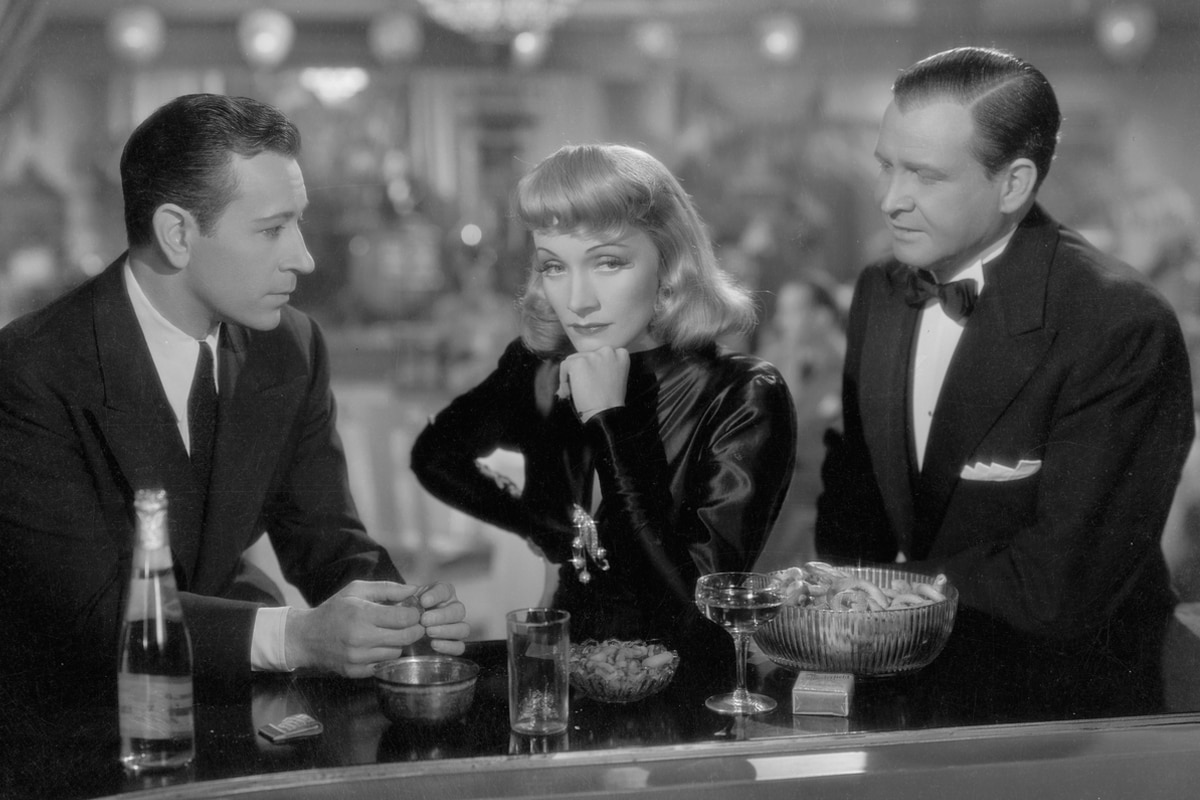
Take three of Raoul Walsh’s four 1941 pictures (Walsh’s artistry meshed perfectly with the studio style). Manpower, with Edward G. Robinson, George Raft and Marlene Dietrich, is the closest to a B picture, but it’s not that far from High Sierra in terms of production value, and it moves as swiftly as The Strawberry Blonde, a period piece. Part of the reason that people love Casablanca is that it has the immediacy of a B picture. Of course, many of the directors in the program—that includes writer/directors like Huston and Daves who were under contract, as well as independent artists like Hawks, Hitchcock, Ford, Wyler and Nick Ray, and later Aldrich, Kazan and Peckinpah—created their own worlds in films where the studio “aesthetic” isn’t quite as present.
But that aesthetic was a major presence in American cinema from the early 30s through the mid-50s, and all I can say is that whenever I heard that introductory theme and saw that WB shield logo, I knew I was going to see something good.
