This article was originally written for the Creepy Cinema programming in the TCM Now Playing newsletter in October 2022.
2 Films | October 3rd
In the history of the Horror movie genre there is a sub-genre that first emerged in the 1960s which featured legendary Hollywood actresses of a certain age portraying characters caught in physical and/or mental turmoil. Many cinephiles now refer to this sub-genre as the Psycho-biddy film or the Grand Dame Guignol or most vulgarly, the “Hagsploitation” film. That vulgar name aside, this sub-genre has proved a great source of material for horror movie buffs, camp lovers, and fans of some of Hollywood’s greatest actresses. This month, we’re pleased to show two shining examples of the subgenre, Dead Ringer (1964) and Possessed (1947).
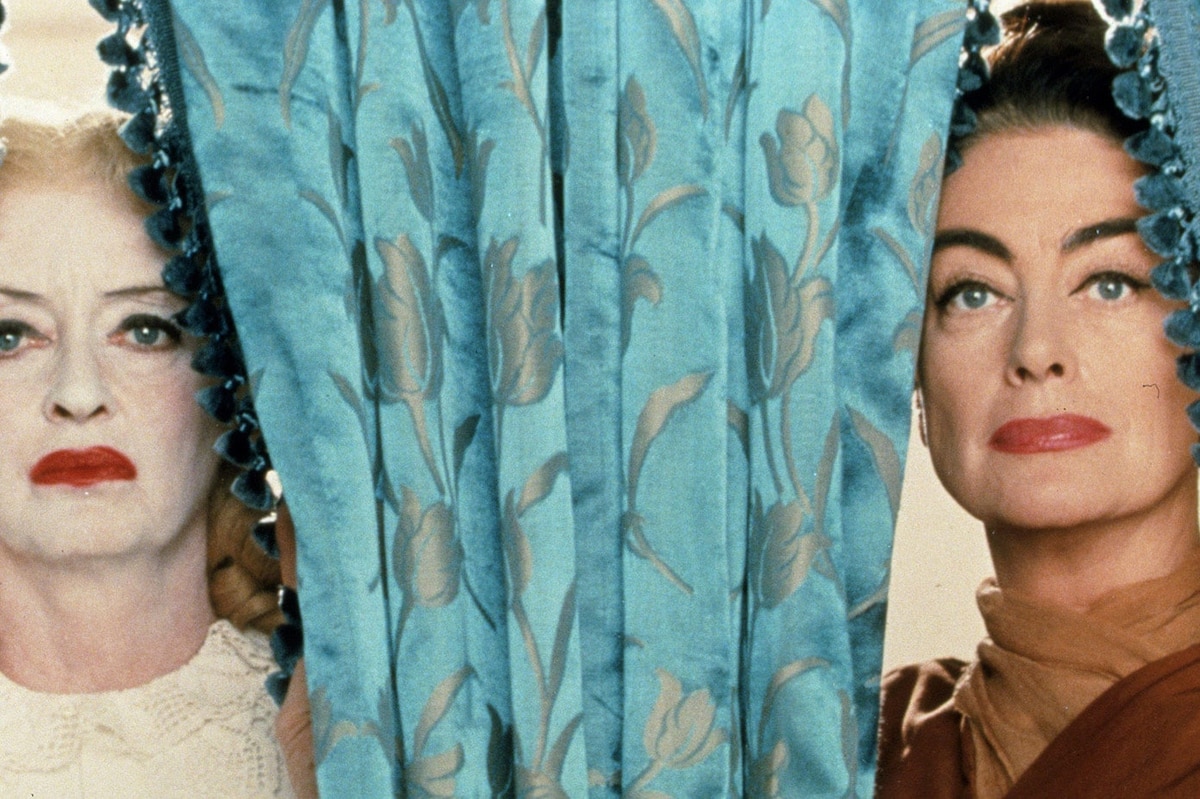
The film which really launched this sub-genre and remains the quintessential film of its kind, is the 1962 cult classic Whatever Happened to Baby Jane? starring two of Hollywood’s greatest:
Bette Davis and Joan Crawford.
In the early 1960s, both actresses had already reached the zeniths of their legendary careers.
Bette Davis had her two Academy Awards, nine nominations, and over 80 film credits. By the late 1950s however, her work in Hollywood had significantly dried up and her appearances of this period were mostly limited to roles in unsold television series pilots.
Joan Crawford, entering her fifth decade in the movie business, was also an Oscar winner who’d been a top star at both MGM in the 1930s and Warner Bros in the 1940s. But in 1959, Crawford had lost her fourth husband, the Pepsi Cola tycoon Alfred Steele, and found herself unemployed and in debt.
Two legends, both still enormously talented and capable, and yet past their primes by the standards of the ageist Hollywood establishment. So, it was within the horror genre that these two legends found another string of successful films for another decade.
The notorious feud between these two actresses was very real and is now a part of popular culture. The rumored sources for their hatred include an alleged affair between Bette and Joan’s then fiancé Franchot Tone during the making of 1935’s Dangerous. Also, Joan’s Oscar winning performance in Mildred Pierce was for a role which Bette had unwisely turned down. Joan’s second nomination came in 1947 for another Davis reject, Possessed.
Over the years, both women always had very strong things to say about each other and it is probably from their own words that cinephiles can draw the best conclusions about how these two felt about each other:
“There were never two more apposed actresses working together in the world. Just totally different people and systems.” Bette Davis
“I'm the quiet one and Bette's explosive. I have discipline, she doesn’t.” Joan Crawford
With such a combative professional and personal history, one might wonder why these two actresses would ever want to work together. Both had the business savvy to know that by finally collaborating, they could generate enormous attention from both general audiences and from the industry which had largely been casting them aside.
It was Joan Crawford herself who first initiated turning the 1960 Henry Farrell novel What Ever Happened to Baby Jane? into a film vehicle for her and Bette Davis.
It tells the story of two sisters, one a former 1930s movie star now crippled and confined to a wheelchair and the other a former child vaudevillian now delusional in her plans for a comeback.
Crawford enlisted Robert Aldrich, her director on the successful 1956 melodrama Autumn Leaves, to both direct and produce Baby Jane. Crawford visited Davis backstage following a performance in the original Broadway production of Tennessee Williams’ Night of the Iguana to directly offer her the title role. With the two actresses and director on board, the trio pitched the project to Warner Bros. Jack Warner hesitantly green lit the project, allowing a minimal budget of $825,000.
Despite their strong opinions of each other and such a sorted history, it is well documented that the actual production of Baby Jane was mostly steady, with production completed in only five weeks.
The film went on to become me an enormous hit, recovering its entire production cost in only eleven days and earning an impressive $9 Million.
This was especially pleasing for the two leads who had opted for a share of the profits instead of their usual salaries. The two made every effort to publicize the film and their hard work paid off. While both actresses received critical praise for their performances, it was Bette’s performance in the undeniably flashier title role that earned an Oscar nomination. A great deal has been made about the Oscar night when Bette lost the award for Best Actress to Anne Bancroft in The Miracle Worker. With Bancroft appearing on Broadway at the time, it was none other than Joan Crawford who accepted the award on Bancroft’s behalf. Davis later said that she felt certain that she was going to win her third Oscar that night and that it was Crawford’s campaigning against her that cost her the prize. Whether or not Crawford launched a full voter campaign against Davis is questionable and has never been proven. It also underestimates the power of Bancroft’s undeniably Oscar worthy performance.
What has been documented as true is that it was Crawford herself who volunteered to accept the award on behalf of not only Bancroft, but any of the three nominated actresses who were not present at the ceremony that night (in addition to Bancroft in The Miracle Worker, Geraldine Page nominated for Sweet Bird of Youth was also performing on Broadway at the time, and Katharine Hepburn nominated for Long Day’s Journey into Night notoriously never attended the ceremonies for any of her nominations)
Even if it wasn't a Crawford campaign that cost Bette Davis a third Oscar, it was upon this loss that Davis’ hostility toward Crawford became much more apparent. Following the success of Baby Jane, Davis, Crawford and Aldrich all teamed up again to score another horror hit with 1964’s Hush… Hush, Sweet Charlotte.
The film tells the story of an aging Southern woman (Davis) trying to defend her plantation from repossession, while coping with psychological torment placed on her by her manipulative cousin (Olivia de Havilland who would replace Crawford). It was another hit and earned an impressive seven Oscar nominations.
Pettiness was more apparent on this set, with Davis deliberately installing a Coca Cola machine instead of a Pepsi as a nudge to Crawford. Crawford also claimed that Bette was working closely with director Bob Aldrich to amp up her role more than Crawford’s, even insisting on playing her character as a teenager for the film’s opening scenes.
Eventually, Crawford claimed illness and withdrew from the picture all together, later confiding she simply did not want to work with Davis again.
After Loretta Young and Vivien Leigh turned down the Crawford role in Sweet Charlotte, Davis’ former Warner Bros. friend and costar Olivia de Havilland took the role.
The rest of the 1960s saw both Bette and Joan in a number of other (here it comes again) “Hagsploitation” films, which basically take over their personas for the remainder of the period.
Crawford was at one point even labeled the “Scream Queen.”
She had a moderate hit with 1964’s Strait-Jacket, a slasher film costarring Diane Baker about a woman who has spent several decades in a mental asylum only to return and find her young daughter now mentally unstable.
In the appropriately titled Berserk (1967), she played the owner of a touring circus who finds that there is a killer lurking among the performers under the big top.
In 1964, Bette played an evil twin who kills her sister in order to take over her rich lifestyle in Dead Ringer, directed by Paul Henreid (her former costar from 1942’s Now, Voyager and 1946’s Deception).
Next was The Nanny (1965), where she played the caregiver a 10-year-old who may or may not be a killer.
None of these films became great favorites of the actresses who starred in them. They viewed them simply as a job. There is a good discussion to have about why these films seemed to be the only work available to these great actresses who just happened to be over 50 (in addition to Crawford and Davis, de Havilland and Barbara Stanwyck seemed to find their most steady work at this time in the horror genre).
While these films may not have been the material that these incredible actresses ideally wanted and while their critical reception were not always the highest, the films of this horror sub-genre remain interesting and entertaining works in the history of classic horror and in the careers of some of our most beloved stars.
Happy Halloween from Bette and Joan.
