September 14 | 7 Movies
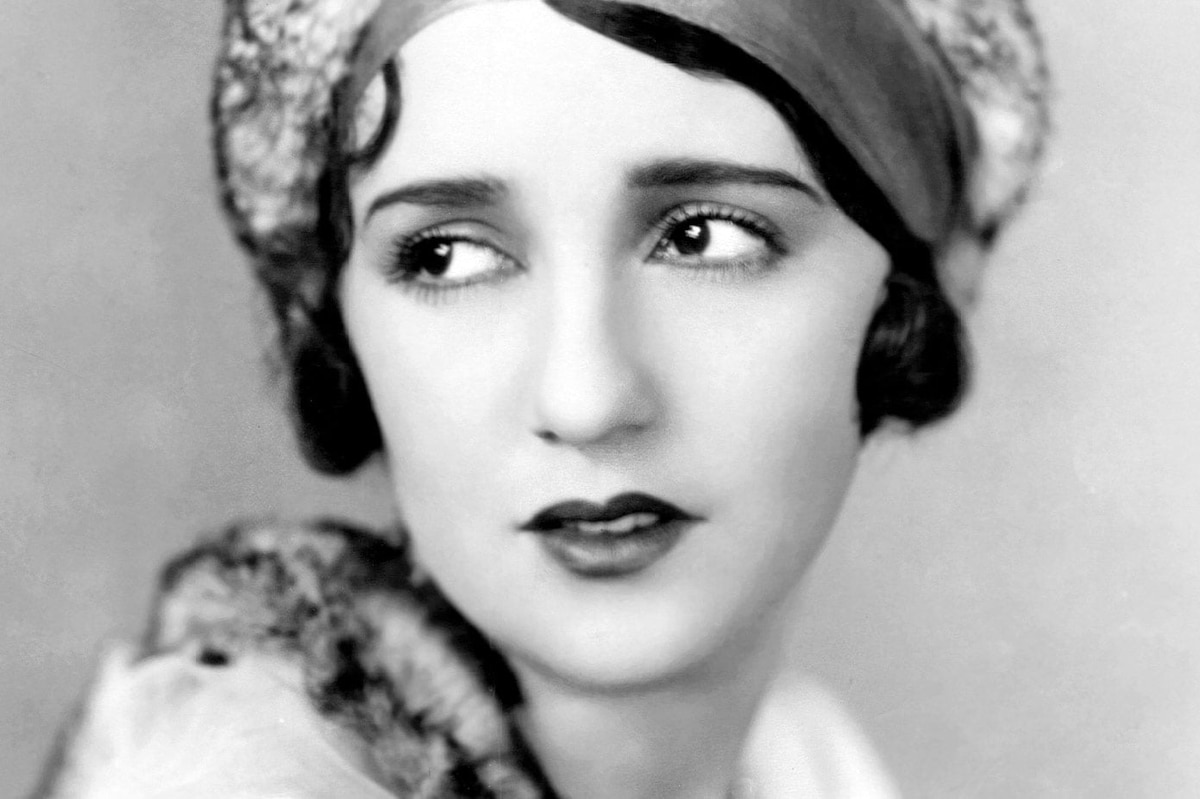
If you recognize her name, give yourself props for your deep movie knowledge because although she’s mostly forgotten today, Bebe Daniels was a star. No, not on the level of Garbo, although Daniels inspired enough adulation to attract one of the first known movie star stalkers and like Garbo retired early from Hollywood pictures. Not on the level of Crawford, although Daniels had the same knack for reinventing herself throughout a career that spanned six decades. Not on the level of Garland, although Daniels started out as a successful child star and had her first major hit as Dorothy in The Wonderful Wizard of Oz (1910). But she was the leading lady in dozens of shorts featuring one of the most popular and influential comic performers of the silent era. She was top billed in more than 50 silent pictures and one of the rare stars to make a smooth and successful transition into talking pictures. She starred in one of the most famous and enduring musicals of all time. And later in her life she had hit runs on radio and television.
Give yourself extra points for knowing that her name was sometimes pronounced as “Bay-Bay” and “Beeb,” but it was actually “Bee-Bee.”
Actually, she was named Phyllis Virginia Daniels when she was born in Dallas in 1901, the daughter of a Scottish-born travelling theater manager and a Colombian-American actress. Show business wasn’t just in her blood; it was on her resume by the age of ten weeks, when her father carried her out on stage for the first time, according to biographer Jill Allgood (“Bebe and Ben,” 1975). Because so many early silent films have been lost, accounts of her start in motion pictures vary, with some claiming she made her debut at the age of four. All agree, however, that she starred in the oldest surviving adaptation of L. Frank Baum’s “The Wonderful Wizard of Oz” when she was 8 or 9.
At the age of 14, she was signed by producer-director-writer Hal Roach as a leading lady for Harold Lloyd, one of the triumvirate of silent comic greats (along with Buster Keaton and Charlie Chaplin) and Roach’s biggest moneymaker. Daniels and Lloyd appeared together in about 150 short films between 1915 and 1919. They were romantically involved for a time and remained good friends throughout their lives.
After casting her in the Gloria Swanson feature Male and Female (1919), producer-director Cecil B. DeMille got Daniels a contract with Paramount. She would work there throughout the next decade, appearing in films by DeMille, Sam Wood, Allan Dwan and other notable directors and opposite such leading men as Rudolph Valentino, Wallace Reid, William Powell and her future husband, Ben Lyon.
Although her many starring roles were popular, Paramount dropped her contract in 1929, perhaps fearing she wouldn’t be acceptable in talkies. If that was the reason, the studio widely missed the mark. Daniels was snapped up quickly by Radio Pictures, later to become RKO, and starred in the musical Rio Rita (1929), one of the earliest hits for the fledgling studio. She went on to make about 20 films over the next six years before she retired from Hollywood and relocated with Lyon to England.
That move was partly motivated by a frightening incident in Daniels’ life. A deranged man who believed he and the star had been married since 1925 made several threatening contacts with her by mail and in person starting in 1931. She and Lyon testified in a 1934 trial that ended with the stalker’s commitment to a psychiatric institution.
After moving abroad, Daniels and Lyon became popular radio and vaudeville performers and national heroes for remaining in London during World War II to entertain during The Blitz. The two, along with their children, later played semi-fictional versions of themselves on radio and then a television series that aired in the UK until 1960. She made her final film, The Lyons Abroad (aka The Lyons in Paris) in 1955, based on the radio and TV shows. After the TV series went off the air, Daniels spent her last years as a semi-invalid, following a series of strokes that eventually took her life in 1971.
Daniels and Lyon returned to the States in 1954 for a vacation and accompanied gossip columnist Louella Parsons to a broadcast of the popular TV celebrity biography show This Is Your Life. Surprised by host Ralph Edwards, who pulled her from the audience to be profiled for the episode, an emotional Daniels said, “I’ve been away so long, they won’t remember me.” Hopefully, TCM’s retrospective will take some steps toward remedying that.
The seven features airing on this one-night tribute are all from Daniels’ career in the early Sound Era.
Because it was made before the Production Code crackdown, Cocktail Hour (1933) was able to air again a familiar trope from that period: the free-thinking, independent woman deciding marriage and motherhood are not her given destiny and faithfulness to one man for life is far too restricting. (Bette Davis, Sylvia Sidney, Barbara Stanwyck, Katharine Hepburn and many others made that same journey during those brief years between the advent of sound and the heavy hand of the Hays Office censorship under Joseph Breen.) Daniels stars as a woman whose wealth comes from her success as an illustrator and poster artist. As in several similar pictures, her attempts at liberation go awry, and after a bad hook-up with a womanizing heel (Sidney Blackmer, the head witch Roman Castevet in Rosemary’s Baby, 1968), she reconciles with her exasperatingly chauvinist boyfriend, played by a young Randolph Scott.
Counsellor at Law (1933) paired Daniels with John Barrymore as an attorney who has risen from his poor Jewish background to become a high-powered success. But there’s a scandal in his past and a high price to pay, causing his snobbish wife to abandon him and run to Europe with another man (Melvyn Douglas). The devastated Barrymore is saved from total disgrace and suicide by his loyal, loving secretary, played by Daniels. Directed by the prestigious William Wyler, the film also featured a full cast of well-known character actors and supporting players, including two future directors, Vincent Sherman, known for several Bette Davis and Joan Crawford vehicles in the 1940s, and Richard Quine (Bell Book and Candle, 1958; Hotel, 1967).
With the advent of talking pictures, Hollywood spotted the opportunity to present a genre that was impossible on screen up to that point, the musical. The first couple of years of sound were loaded with song and dance movies, highly popular at first but many of them so clunky, amateurish and hampered by limited technology, all without much cinematic finesse or flair, that the public soon grew tired of them. Studio after studio saw their investments in such films go belly up. All that changed with 42nd Street (1933), the backstager that single-handedly revived musicals and, in the depths of the Great Depression, became a symbol of a new era of hope after the election of Franklin Roosevelt. Bebe Daniels had already proved herself capable of carrying a musical to major box office success in Rio Rita, and with her star somewhat faded since then, she was a natural for the part of the temperamental diva who breaks her ankle and sees her leading stage role go to a newcomer (Ruby Keeler). But not before she gets to perform the number “You’re Getting to Be a Habit with Me,” which concludes with her sashaying arm in arm with a character costumed and made up to look suspiciously like Gandhi! Daniels meshed well with a large ensemble cast that included Dick Powell, Ginger Rogers, George Brent and Academy Award winner Warner Baxter (In Old Arizona, 1928).
Dashiell Hammett’s mystery about private eye Sam Spade caught up in the search for a priceless statue of a black bird has been the inspiration for several films, countless imitations and even spoofs. This version of The Maltese Falcon (1931) was the first screen adaptation of the novel. Daniels was top billed as the lying, scheming femme fatale later played by Bette Davis in Satan Met a Lady (1936) and Mary Astor in the most famous take on the classic, The Maltese Falcon (1941). The New York Times said director Roy Del Ruth “had done splendidly by an excellent mystery story…without losing any of the suspenseful diversion” of the source book. While acknowledging that Daniels “performs exceptionally well” and praising the other cast members, the review said the film really belongs to Hammett and Ricardo Cortez as Spade, the part that helped make a star of Humphrey Bogart ten years later.
In her talking picture career, Daniels had already run the gamut of characters from society sophisticate to spunky “Gal Friday” to Broadway musical star to shadowy con artist when she took on the role of an ordinary nurse. Well, perhaps not so ordinary, as she is secretly married to a man rendered insane after a car accident and pursued by a pair of doctors who may be able to restore him to health. She suffers nobly in Registered Nurse (1934), her penultimate Hollywood picture and last starring role before she and husband Ben Lyon left for London. Variety said Daniels “gives her all” in a part that “would sink a less competent player.”
Silver Dollar (1932) casts Edward G. Robinson as a 19th century Colorado prospector whose fortunes – and hubris – rise quickly after striking a lode of the title mineral and fall just as precipitously when the country switches to the gold standard. Daniels plays the flamboyant and alluring Lily Owens, who tempts him away from his long-suffering wife (Aline MacMahon). The story is an entertaining fictionalization of the life of “Silver King” Horace Tabor, who served briefly as a U.S. Senator and built Denver’s opera house in the late 1800s. Daniels’ character is based on his second wife, Elizabeth “Baby Doe” Tabor, considered a notorious homewrecker and gold digger in her day but reconsidered in recent years as one of a number of women to be ostracized and punished for being too beautiful and bucking Victorian social norms. Composer Douglas Moore’s opera about her, “The Ballad of Baby Doe,” premiered in 1956 in Colorado and two years later in New York, where the part was sung by Beverly Sills. Photos of Baby Doe reveal a striking likeness to Daniels.
Bebe Daniels met Ben Lyon on the set of Alias French Gertie (1930), and the two were wed just a couple months after its release. My Past (1931) was the second of their six features together, although the long-time couple, married until her 1971 death, also appeared jointly in several shorts and many episodes of their long-running British series, first on radio, then television. She plays a Broadway star juggling the attentions of an older bachelor and a young married man. When things go wrong, she does what any scandal-prone beauty of the time apparently did: book an ocean voyage. The older gentleman seeking her favors is played by Lewis Stone, later known as Mickey Rooney’s dad in the popular Andy Hardy film series. There’s plenty of Pre-Code raciness on hand, along with the welcome addition of Joan Blondell as Daniels’ pal.
