The very purpose of a costume is to help create a character. Whether it’s something obvious, like the Wicked Witch of the West versus Glinda the Good Witch or something more subtle, we can instantly tell so much about a character by how they are dressed.Throughout film history, a particularly interesting use of costume design has been in the creation of the movie criminal. How Hollywood costume designers dressed their gangsters, conmen and femme fatales has entertained and fascinated film and fashion buffs alike. It has also inspired mainstream fashion. Looking at some of the great costumes of great criminals is a unique way of looking at all film and fashion history.
One of the first and best uses of costume design to characterize a criminal was the one-and-only Edith Head’s designs for Barbara Stanwyck as the quintessential femme fatale Phyllis Dietrichson in 1944’s Double Indemnity. With her obviously fake blonde wig, extra dark sunglasses and racy anklet (which is directly commented on in the film) we know just by looking at her that this lady is not to be trusted. At the same time, her look is the embodiment of 1940s fashion. The square shoulders, tight fitting sweaters and high waist cut dresses are up to trend with the looks of the day. Edith Head’s costumes are tailored both to Stanwyck’s figure, to the Dietrichson character and to 40s fashion. Head and Stanwyck had first worked together on the 1941 screwball comedy The Lady Eve, another film which had Stanwyck playing a con artist (but a much more lovable one). This film showed the not always fashionable Stanwyck in over twenty different costume changes. Where some previous designers had found Stanwyck’s unique figure a challenge to design for, Head knew just how to accommodate her.
"She possessed what some designers considered to be a figure "problem" – a long waist and a comparatively low rear end", Head recalled. "By widening the waistbands on the front in her gowns and narrowing them slightly in the back, I could still put her in straight skirts, something other designers were afraid to do, because they thought she might look too heavy in the seat. Since she wasn’t the least bit heavy, I just took advantage of her long waist to create an optical illusion."
Head would be Stanwyck’s costume designer of choice for the rest of her career, often barrowing her from her home studio of Paramount. When comparing the lovable conartist of The Lady Eve with the femme fatale of Double Indemnity Stanwyck’s looks are completely different and unique to the characters and yet both are pure Stanwyck, pure Head and pure 1940s fashion.
In 1967’s Bonnie and Clyde, the bank robbing duo are depicted more as a sleek and sexy young couple than as stone hard criminals. This was achieved by the casting of dynamic stars, Warren Beatty and Faye Dunaway, and by dressing them in period appropriate clothes. Costumer designer Theadora Van Runkle created clothes very accurate to the 1930s that were originally rejected by star Faye Dunaway. To everyone’s surprise the looks of the characters were a hit with audiences and brought back such styles as maxiskirts and French berets. Double breasted suits on men had not been in vogue since the 1940s, but Warren Beatty’s look in the film helped spark a revival.
Following this success, Van Runkle became one of Dunaway’s favorite designers and created her clothes for her next two films, The Thomas Crown Affair (1968) and The Arrangement (1969), and her 1968 Oscar dress.
For Bonnie and Clyde, Theadora Van Runkle received the first of her three Oscar nominations for Best Costume Design. She would receive the honor again for The Godfather Part II (1974) and Peggy Sue Got Married (1986).
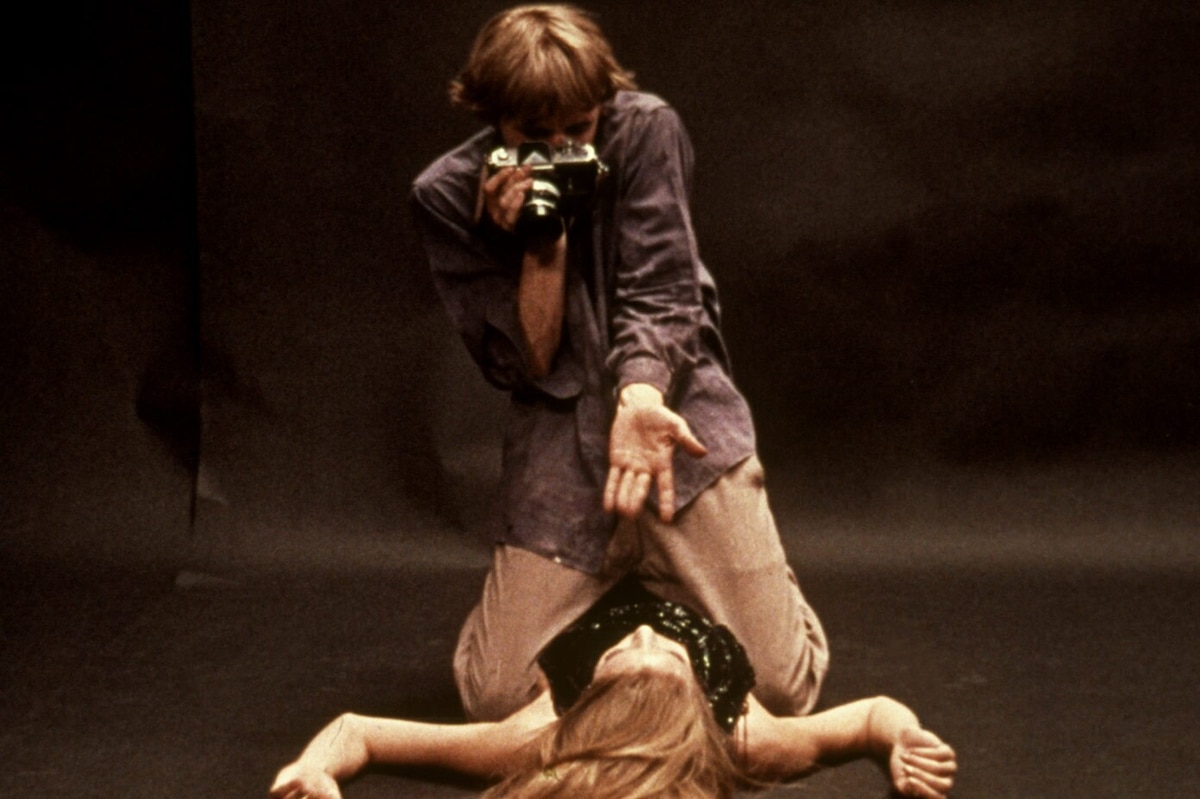
One of the best crime films set in the fashion world itself is Michelangelo Antonioni’s Blow-Up, from 1966. This searing thriller stars David Hemmings as a fashion photographer who finds he may have witnessed a murder while casually photographing a couple in a London park. The film stars several noted actresses of the time, including Vanessa Redgrave, Sarah Miles, Jane Birkin and German supermodel Veruschka von Lehndorff as herself. A crime story set in the world of high fashion with multiple big-name actresses sounds like a dream project for a costume designer, but also a challenging one. Australian designer Jocelyn Rickards pulled out all the stops with montages, photoshoots, miming sequences, etc.
Rickards would probably have received awards attention for her work in Blow-Up if she hadn’t already been Oscar nominated for the film Morgan! and won a Bafta for Mademoiselle all within the same year.
All of these examples of film, fashion, and crime show that it’s not the criminal who makes the clothes; it’s the clothes who make the criminal.
