Actresses have been at the forefront of fashion trends since the early days of cinema. Incorporating menswear into their wardrobes was a revolutionary idea, one that defied gender norms and gave women more freedom of expression. The 20th century saw radical changes in womenswear often influenced by what movie stars were wearing on screen. Women were entering the workforce and Greta Garbo wearing trench coats and pants and Marlene Dietrich shocking everyone in her tuxedo and top hat set the stage for actresses like Katharine Hepburn and Diane Keaton to embrace their own style in films like Woman of the Year (1942) and Annie Hall (1977).
As Greta Garbo biographer Giusi Ferré writes in his book “Greta Garbo: The Mystery of Style,” “she was a woman with an elegant line, slender but strong, so contemporary with her vaguely boyish allure to rewrite the rules of glamour and charm.” As much as Garbo craved anonymity, she was also a huge star whose influence set new fashion trends. Garbo herself led an active lifestyle and wearing trousers allowed for more freedom of movement. However, the public wasn’t ready to embrace her alternative style. A newspaper declared “GARBO IN PANTS!” as a picture of Garbo walking with Mercedes de Acosta down Hollywood Boulevard dressed in menswear graced the page. Even as the shock waned, it would take years for Garbo to be recognized as what “Movie Classic” magazine referred to as “the real pioneer of pants.”
Costume designer Adrian was key to Garbo’s androgynous looks. In The Single Standard (1929), Garbo’s characters wear her lovers clothes including striped pajamas, wide-legged trousers, sweaters and a sailor’s hat. This wasn’t out of the ordinary for Garbo whose own wardrobe leaned more towards simple and tailored looks and was very much inspired by menswear. Garbo, by way of Adrian, is credited with introducing the trench coat to womenswear with A Woman of Affairs (1928). In the film, she wears two plaid-lined trench coats with the collar turned up. Adrian believed in overemphasizing his subject’s weaker features to distract from them. In Garbo’s case, it was her broad shoulders. He also believed that menswear on women heightened their natural femininity rather than mask it. Garbo and Adrian would collaborate on 19 films together including Queen Christina (1933) in which Adrian designed Garbo’s historical wardrobe. In the film, Garbo’s character masquerades as a man and prefers wearing the traditional men’s look of a doublet with hose rather than the opulent dresses she is required to wear for her royal commitments.
While Garbo preferred privacy, Marlene Dietrich embraced publicity. She caused a stir when she graced the screen in Josef von Sternberg’s Morocco (1930) wearing a form fitting tuxedo complete with bow tie, coat tails and a top hat. Dietrich’s character performs at a nightclub where her seemingly audacious style is greeted by jeers. The crowd slowly embraces her “mannish” look and the scene plays with gender roles and sexual expression by featuring a flirtatious moment between Dietrich and another woman. Von Sternberg was quoted as saying, “having Dietrich wear trousers was not meant to stimulate fashion, which encouraged women to ignore skirts in favor of the less picturesque lower half of male attire. Asked to make a trailer in which Dietrich appeared wearing white tie and tails, I ran into a storm of opposition. The studio officials swore by all that was sacred that their wives wore nothing but skirts, going as far as to claim that a pair of trousers could not be lifted. Hours of debate ensued, draining my energy and theirs.” Paramount Pictures took advantage of the potential for bad publicity by creating a marketing campaign that highlighted “Marlene’s mannish style” to spark interest in the movie.
Dietrich went on to make a splash wearing a tuxedo suit to the premiere of The Sign of the Cross (1932). The following year she was denied entry at the Brown Derby for arriving in slacks. Comedy duo Bert Wheeler and Robert Woolsey showed their support for Dietrich by arriving at the restaurant wearing skirts. These two incidents ignited a firestorm of media attention for Dietrich. The New Movie Magazine devoted an article to “Intimate facts about Marlene’s wardrobe.” Her personal style included trousers, men’s overcoats, tuxedo suits, berets and various other pieces of menswear. Dietrich frequented tailor shops including Hollywood’s Watson & Sons who were inundated with requests from women across the country who wanted suits and trousers just like hers. In the Modern Screen article “Why Dietrich Wears Trousers,” she’s quoted as saying “trousers and masculine clothes make me appear more feminine than dresses do… I think you will agree, that certain types of women look well in masculine clothes… even better than they do in frills and laces. I always wear plenty of flowing gowns in my pictures, but in real life a man’s suit makes me feel (and, I hope look) more feminine than the most beautiful dress in the world.” For Dietrich, menswear was not only more practical, but it was also more economical and women’s fashions changed so frequently whereas men’s fashions were far more steady. Movie Classic magazine’s article “Will It Be Trousers for Women?” canvassed the opinion of Dietrich and other movie stars. Fay Wray, Joan Bennett and Mae Clark were more open to embracing the style and Adrienne Ames, Lilyan Tashman and Constance Bennett voiced their disapproval.
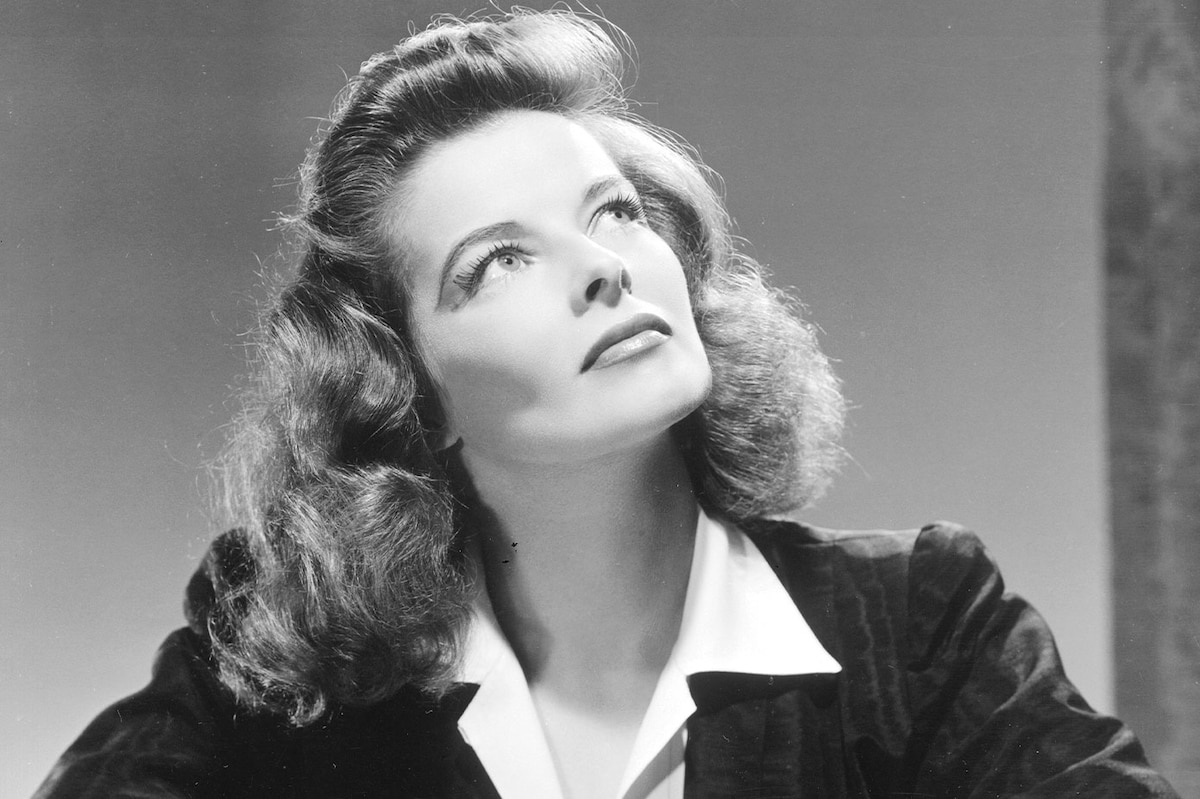
Observing Garbo and Dietrich closely was actress Katharine Hepburn. Emboldened by her upbringing where she was free to explore her masculine side, Hepburn embraced clothing that was simple, clean and functional and considered herself immune to popular trends. Hepburn biographer William J. Mann wrote that while Garbo and Dietrich “projected an undeniable erotic allure” Hepburn was “angular and sexless.” Hepburn prized individuality and comfort over glamour and following in Garbo and Dietrich’s footsteps she chose an unconventional wardrobe that best suited her needs.
Hepburn’s naturally rebellious style spilled into her film work. Director Dorothy Arzner, reflecting on their collaboration for the film Christopher Strong (1933), said “Kate wasn’t someone you could mold easily, that you could control… she was extremely strong-willed. Her tone was all wrong; I had to soften her constantly.” For Sylvia Scarlett (1935), a film in which Katharine Hepburn’s eponymous character disguises herself as a man, she sought out costume designer Muriel King to help her with the transformation. Hepburn refused to wear a wig, instead preferring to have her natural hair cut into a men’s style. She also fully embraced King’s wardrobe and was seen wearing the same clothes off screen. According to writer Guy Babineau, “Katharine Hepburn’s mannish wardrobe inspired an unprecedented demand for stylish women’s trousers.” However, Sylvia Scarlett was a flop and Hepburn would soon be infamously labeled “box office poison.” She eventually rebounded with films like The Philadelphia Story (1940) in which she plays a headstrong divorcee who alternates between casual menswear looks with trousers and feminine dresses.
For Woman of the Year (1942), Hepburn was dressed by costume designer Adrian. In the film Hepburn plays Tess Harding, a successful newspaper reporter who falls for a rival journalist played by Spencer Tracy. Hepburn’s wardrobe mirrored the emotions her character was feeling at various points throughout the film. In the scenes where her character is entertaining guests or trying to appease her love interest, her clothes skew feminine. While at work she wears skirt suits with shoulder pads and the occasional popped collar, combining both feminine and masculine styles. At home she can be seen wearing a velvet smoking jacket with wide pants and a button-down shirt while dictating notes to her secretary.
Hepburn, much like Garbo and Dietrich, disrupted the notion that women shouldn’t wear pants. But it would take decades for women to fully embrace the style. In the 1960s and early 1970s, when the women’s liberation movement was in full swing, women fought against social restraints by taking on more masculine looks. One of the biggest trailblazers for the trend of women in menswear was Diane Keaton in Annie Hall (1977). In the film, we see her character transform from vulnerable and neurotic to more self-assured and her wardrobe highlights her evolution. The most famous look has Keaton in khaki pants, an oversized white button-down shirt, black vest, blue tie and floppy hat. This was a far cry from the polished menswear looks that women sported in the past. It was a more thrown together look which inspired fans to be creative in assembling outfits from thrifted and secondhand pieces.
The inspiration behind this and Keaton’s other menswear looks in the film is disputed. Costume designer Ruth Morley, actress Diane Keaton and fashion designer Ralph Lauren are all credited with contributing to the iconic Annie Hall look. In a 1978 interview with Vogue, Morley claimed that Annie Hall’s style was inspired by her own which focused on mixing old and new, feminine and masculine to create a look that was both unique and inexpensive. It’s also said, that because the character of Annie Hall was loosely inspired by Diane Keaton herself, that the wardrobe matched her own personal style. Keaton was said to have sought out her own closet as well as Ralph Lauren’s showroom to gather pieces for her various outfits in the film. The look also became Keaton’s own signature style for decades to come.
When Annie Hall hit theaters, Keaton’s menswear look had a huge impact on the fashion world mostly because it was very easy to recreate. Morley said, “anyone could duplicate the ‘Annie Hall look’. Even teens could wear a man’s shirt and add a vest and tie. The stores already had all the ingredients for mixing and matching. People were tired of being dictated to by the fashion industry. Take a look in the street, the consumer can wear any ‘look’ she chooses.”
Garbo, Dietrich, Hepburn and Keaton were fashion revolutionaries in their own unique ways. By rejecting conventionality, they set the stage for women in menswear making this form of expression chic.
