This article was originally written about programming for the TCM Now Playing newsletter in February 2022.
5 Movies | Wednesday, February 9, beginning 8 p.m.
Movies have loved a good boxing match since the very beginning, when Thomas Edison’s company filmed an 1894 bout between Mike Leonard and Jack Cushing, considered the first sports film ever released. In fact, that last decade of the 19th century saw at least 14 short boxing silents, many of them starring that period’s most famous champion, James J. Corbett, whose dashing exploits and popular appeal were depicted by Errol Flynn in Gentleman Jim (1942).
An eclectic array of actors – from Charlie Chaplin (City Lights, 1931) to Elvis Presley (Kid Galahad, 1962) to Denzel Washington (The Hurricane, 1999) to Hilary Swank (Million Dollar Baby, 2004) – have strapped on the gloves and gone a few rounds on screen. By some estimates, boxing has featured prominently in no less than 225 documentary and fiction films worldwide. This special themed evening showcases five of the best.
When We Were Kings (1996), considered one of the best boxing documentaries ever made, is an entertaining record of the legendary “Rumble in the Jungle” between George Foreman and Muhammad Ali in Zaire on October 30, 1974. Producer-director Leon Gast spent 22 years editing and securing financing for the film, but the wait was worth it. The match itself, at which Ali regained the heavyweight championship title taken from him seven years earlier over his refusal to be drafted during the Vietnam War, is thrilling enough. The viewing experience is made even richer by the inclusion of interviews with Norman Mailer, Spike Lee, George Plimpton and others; archival footage of both boxers’ lives and careers; and footage of the Zaire 74 music festival featuring James Brown and B.B. King. When it was finally released, it was a critical and commercial success and won the Academy Award for Best Documentary Feature.
After a string of box office flops in the 1960s, it almost looked like the work of A-list director John Huston (The Maltese Falcon, 1941; The African Queen, 1951; The Misfits, 1961) was no longer relevant in Hollywood’s post-studio age. He came back strong with Fat City (1972), a surprise hit at the Cannes Film Festival whose positive critical reputation has only grown over the years. Not a bad outcome for an intimate, downbeat story of underdogs and losers. Stacy Keach plays a down-and-out ex-boxer who mentors and then rivals a young fighter (Jeff Bridges). The potential grimness of the film is buoyed by what Roger Ebert called the contrast of “the hopelessness of their lives with the dogged persistence of their optimism.” Particularly notable is the cinematography of Conrad Hall (In Cold Blood, 1967; Butch Cassidy and the Sundance Kid, 1969; American Beauty, 1999), who shot on location in the story’s setting, Stockton, Calif., including what was left of that city’s now demolished Skid Row.
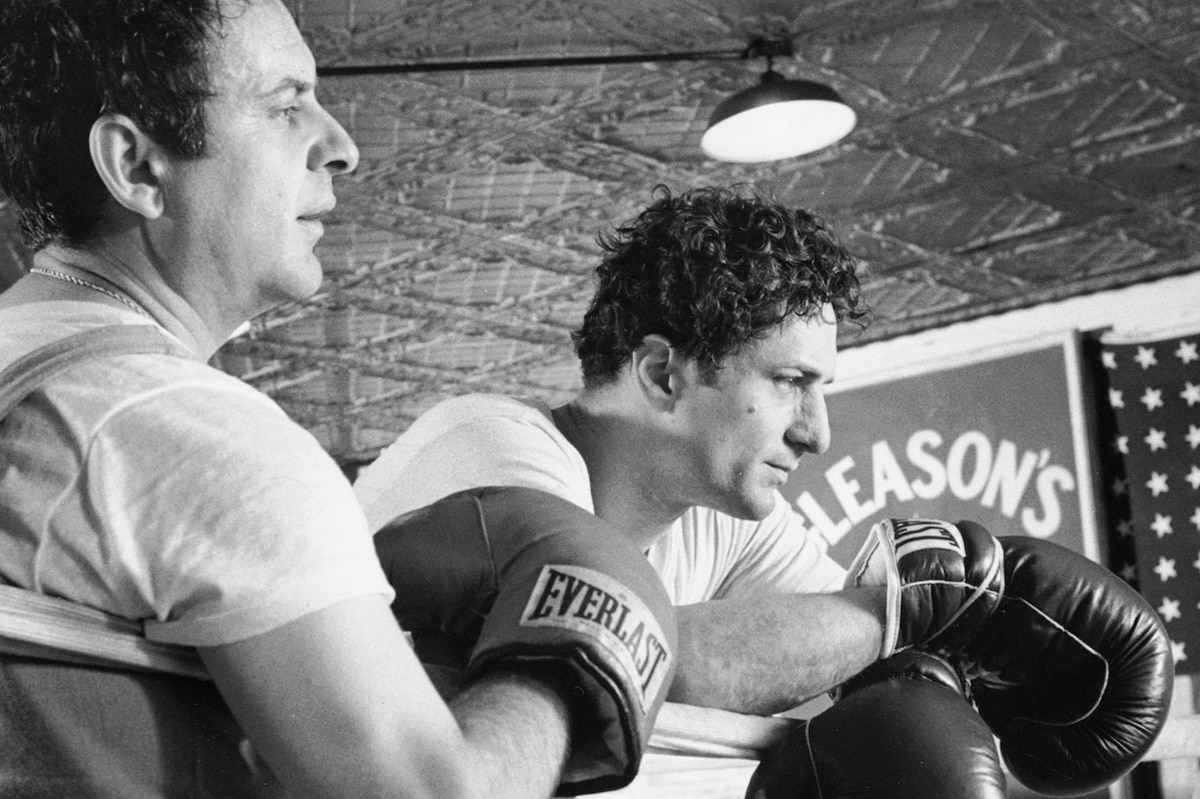
Raging Bull (1980) is not only often recognized as the best narrative boxing movie ever made, it also appears frequently on critics’ polls and audience lists of the greatest movies of all time. And yet on its initial release it did tepid box office and received decidedly mixed reviews. Even its director, Martin Scorsese, was reluctant to take on the project when star Robert De Niro first brought him professional fighter Jake LaMotta’s 1970 memoir. The story of a middleweight battling his way up through the ranks pulls no punches (unavoidable pun) in its depiction of an abusive, emotionally inarticulate man who became a star boxer in large part because of his ability to withstand astonishingly excessive punishment in the ring. What sounds like an unappealing subject for a film is elevated by the screenplay’s deep dive into the soul of a tortured man, the brutally unflinching performances by De Niro and the supporting cast and the operatic intensity of the boxing sequences captured in stunning black and white by cinematographer Michael Chapman. The film has achieved classic status as a portrait of loyalty, male violence and sexual obsession. As Tim Pelan wrote on cinephiliabeyond.org, this is “not your dad’s boxing movie.”
Before the big-budget musicals West Side Story (1961) and The Sound of Music (1965), long before the bloated theatrics of the all-star disaster flick The Hindenburg (1975), Robert Wise worked for RKO, where he directed moody fantasy thrillers like The Curse of the Cat People (1944) and dark, tawdry dramas like Born to Kill (1947). The Set-Up (1949, his last project under contract to the studio) hews closely to the film noir style of his earlier pictures, achieving in its running time of just over an hour a poetic, fatalistic tale of an aging boxer dealing with the corruption of the fight game while attempting to maintain his dignity and honor as he tries to quit the sport. The screenplay, adapted from a 1928 narrative poem about the death of a Black boxer, and Wise’s gritty but sensitive direction afford star Robert Ryan the opportunity to deliver one of his finest performances.
We don’t usually think of boxing films as tear jerkers, but The Champ (1979), like the 1931 film of the same name, certainly pulls out all the stops to get audiences weeping copiously. Lengthening the original film’s screenplay to pile adversity upon disaster, the film follows the travails of an ex-champ (Jon Voight) trying to put his life right for the sake of his adoring young son (Ricky Schroder, in full golden moppet mode in his debut) and to impress his ex-wife (Faye Dunaway). Franco Zeffirelli, known more for staging operas and lush period movies (Romeo and Juliet, 1968), was an unlikely director for a tough boxing story, but he was just right for the earnest sentimentality of this melodrama.
