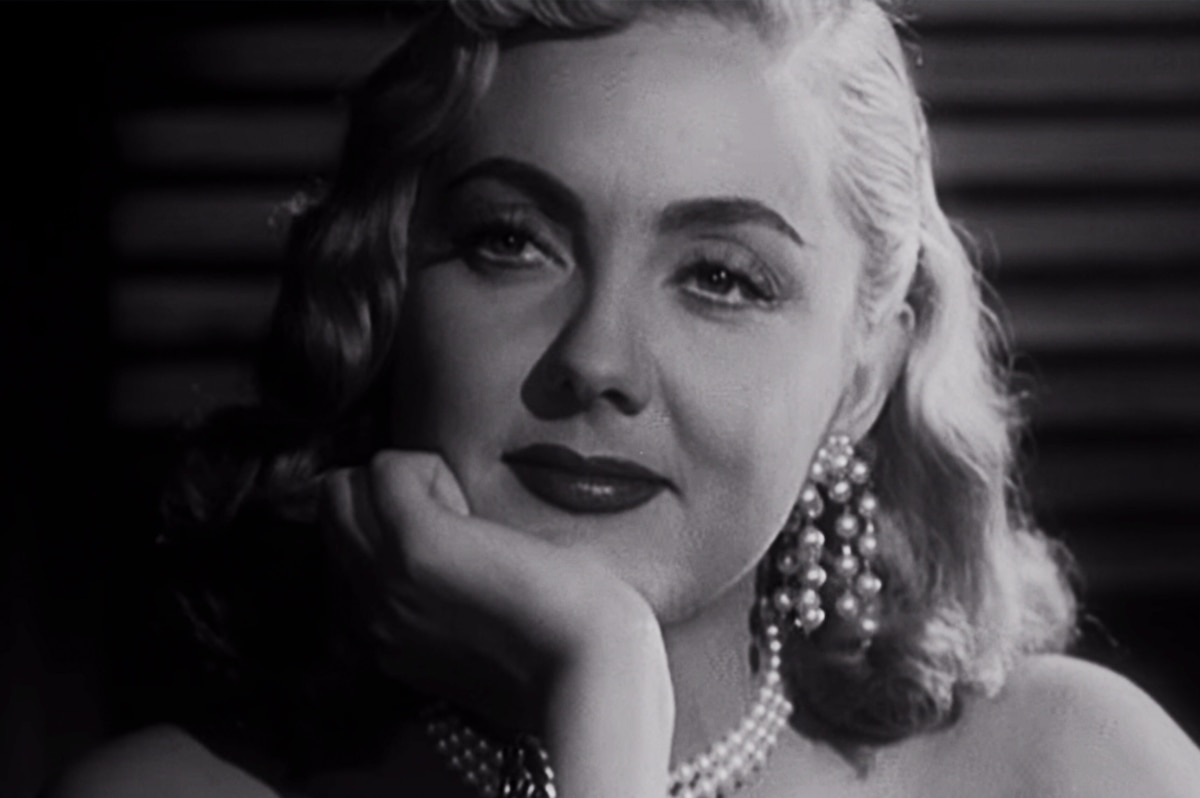
Noted Mexican director René Cardona took strong cues from American film noir for this story of a cabaret entertainer who comes to the aid of a wounded man in trouble, with all the sexual tension, smarmy bad guys, doomed romance and downbeat ending expected of the genre. Originally from Havana, Cuba, Cardona made his name as an actor and director during the Golden Age of Mexican cinema (1930-1969), when the country’s industry attained its highest production output, quality and financial success.
After leaving Cuba and medical school in the mid-1920s to live in New York, Cardona worked as a movie extra and became friends with film heartthrob Rudolph Valentino. Taking on various jobs in the American film industry, including assistant director and technical adviser, he eventually was given the opportunity to direct the first Spanish-language feature made in North America, Sombras habaneras/Havana Shadows (1930), in which he also played the lead.
In 1932, Cardona moved to Mexico and began a successful acting and directing career that lasted for the next 50 years and more than 100 films, many of which he wrote. He also occasionally took on second unit chores, directing the Mexican crews of American Westerns shot south of the border, among them Sitting Bull (1954) and Two Mules for Sister Sara (1970).
For Puerto de tentación, Cardona assembled a cast of popular actors, including a leading man he had worked with several times previously, Ramón Armengod. Barcelona-born Emilia Guiú, who appeared in more than 60 movies well into her 70s, most of them in Mexico, played against her usual femme fatale/villain image as the kind-hearted but ill-fated entertainer.
The film was shot by cinematographer Domingo Carrillo, no stranger to dark crime dramas. He lent a suitable noir look to the sets designed by the film’s art director, Francisco Marco Chillet. Although it’s sometimes obvious the movie was shot on a sound stage, even the outdoor street scenes, Carrillo and Chillet manage to create a moody evocation of the seedier side of Acapulco that has been compared to the 1930s French crime cycle set in Marseilles.
One odd bit of trivia has to be noted: the laughably dreadful poster art for the film featuring a terrible likeness of Guiú. She may not have been a great beauty, but she certainly wasn’t unattractive (bearing some resemblance to American actress Audrey Totter). But it’s amazing she didn’t sue over the way she was drawn in publicity materials for this film!
