In partnership with The Film Foundation, iconic film director and classic movie lover Martin Scorsese's exclusive monthly contribution to the TCM newsletter Now Playing in December 2020.
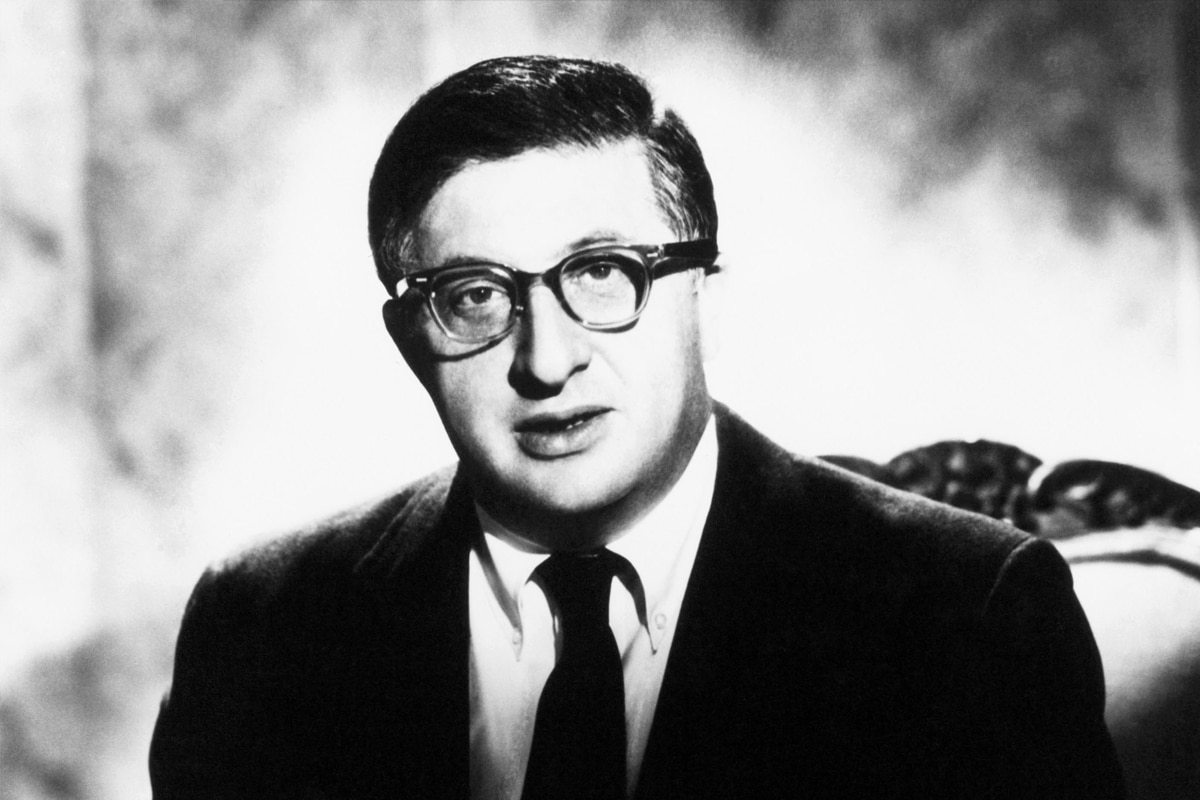
This December, TCM is doing a month-long salute to Bernard Herrmann, who has come up quite often in this column: he’s an essential figure in film history, as powerful a creative force as many of the directors he worked with. He was born into a Russian Jewish family in 1911 in New York City. When he was very young, he started going to the opera and the symphony, he learned to play the violin, and by the time he was an adolescent, he could sight-read well enough to study the scores of all the great works in the classical repertoire. He became friends with Aaron Copland and George Gershwin and Virgil Thomson, and he enrolled at NYU in 1929. He started in radio in the mid-30s as an assistant conductor at Columbia, which led to a meeting with Orson Welles—Herrmann joined his “Mercury Theater of the Air” in 1938, and Welles was the one who brought Herrmann to Hollywood to write his first film score.
There are many aspects of Citizen Kane that are truly astonishing every time you watch it…and listen to it. Welles was a consummate radio artist and a lot of the power of his shows had to do with his sense of rhythm: he knew how to direct the audience’s attention through the counterpointing of sounds and music, a talent that obviously played a crucial role in his theatrical productions and that made his films so unusual. Herrmann’s scores for Kane and The Magnificent Ambersons were like no other film music coming out of Hollywood. They’re more than scores in the conventional sense. They’re key creative elements, and they play out on multiple levels—they’re dynamic, they’re profoundly American (Herrmann had a special appreciation for composers like Charles Ives and Carl Ruggles), they have a very unusual sense of irony but they are at the same time deeply emotional. Herrmann later developed an equally close and far longer-lasting partnership with Alfred Hitchcock, but in truth the man was incapable of writing an ordinary score no matter who he was working with or what the nature of the material. As François Truffaut put it, Herrmann turned every picture he scored into grand opera.
There are 25 films in the TCM tribute, and every single score is a thing of beauty, from the Welles pictures to Beneath the 12-Mile Reef, from Vertigo to Mysterious Island, from The Devil and Daniel Webster to It’s Alive. There have been many great composers in the cinema—Dimitri Tiomkin, Elmer Bernstein, Victor Young, Miklos Rosza and Herrmann’s old friend Jerome Moross among them. Herrmann was truly a genius. I can say it as an admirer and as someone lucky enough to collaborate with him on what turned out to be his very last picture, Taxi Driver. He was tough. He was exacting. And he gave me exactly what I wanted, which is to say, more than I could have possibly imagined or even hoped for.
