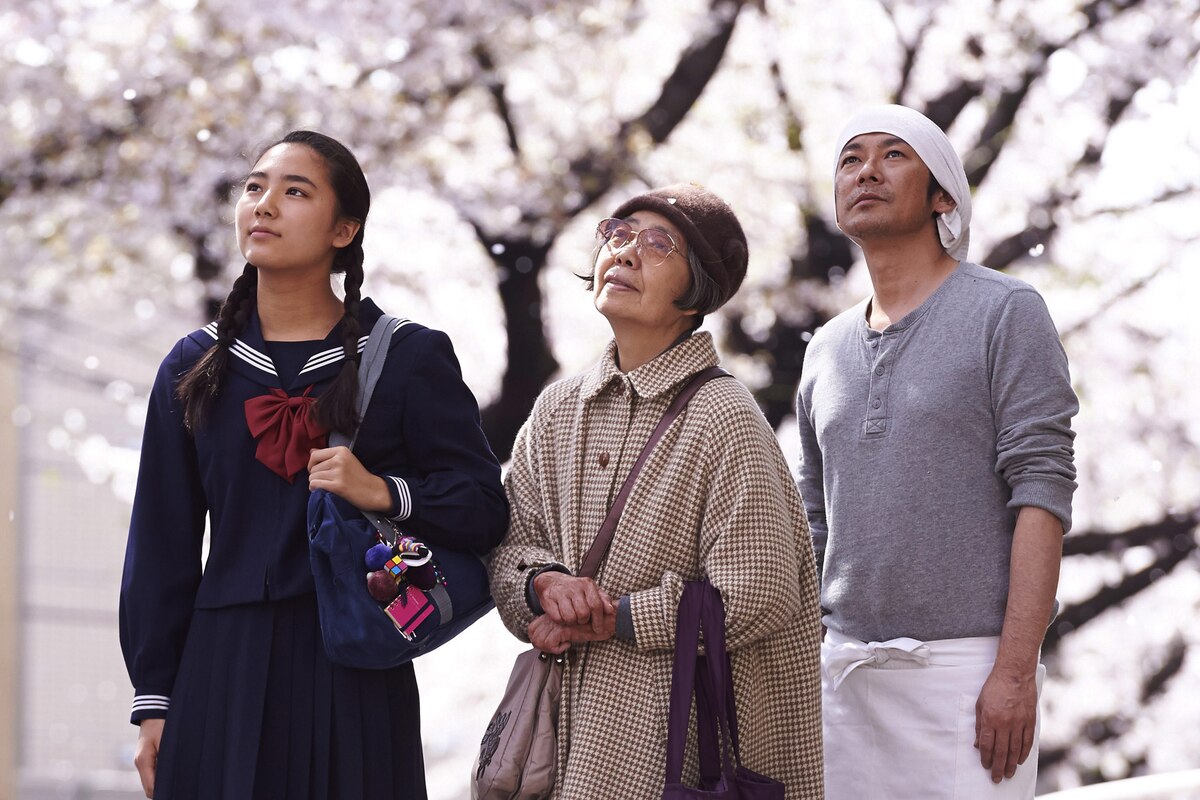
Sweet Bean (2015), based on a 2013 novel, follows in the tradition of modern Japanese “food” movies that began with the huge international hit Tampopo (1985). The story is set in a Japanese town overflowing with cherry blossoms, where middle-aged Sentarô (Masatoshi Nagase) runs a tiny shop selling dorayaki, a popular Japanese confection that consists of two pancakes wrapped around anko, or an, a sweet red bean paste. He places an ad for an assistant that is answered by 76-year-old Tokue (Kirin Kiki). Sentarô is skeptical that she has the strength for the job, but it turns out she creates the most sublime anko Sentarô has ever tasted. “Listen for the stories the beans tell,” she tells him as a way of teaching him her secret – and as a way of teaching him about living life. Sales start to skyrocket, but things take a turn when it is discovered that Tokue suffers from leprosy – a condition that has made Tokue an outcast for most of her life (and until fairly recently was treated very harshly by Japanese law and society). Sentarô and Tokue’s heart-tugging friendship made Sweet Bean one of director Naomi Kawase’s most internationally accessible films to date, helped by the loving, mouth-watering reverence with which she and her cinematographer Shigeki Akiyama shot the food-making scenes. Kawase started her career making experimental films and first-person documentaries before becoming the youngest director to win the Caméra d’Or at the 1997 Cannes Film Festival with Suzaku, her first feature. In an interview, Kawase said that the Sweet Bean novelist had envisioned veteran actress Kirin Kiki as Tokue even as he wrote the novel, so going with her was a natural choice. Of the character Tokue, Kawase said, “She’s not struggling anymore. Instead she’s taken a deep look at herself. If you look at yourself deeply, you understand why you’re here in this world. You can value yourself more; you don’t have to compare yourself with others and think you’re unfortunate. Since you’re here, the light shines on you – and it’s beautiful.”
by Jeremy Arnold
