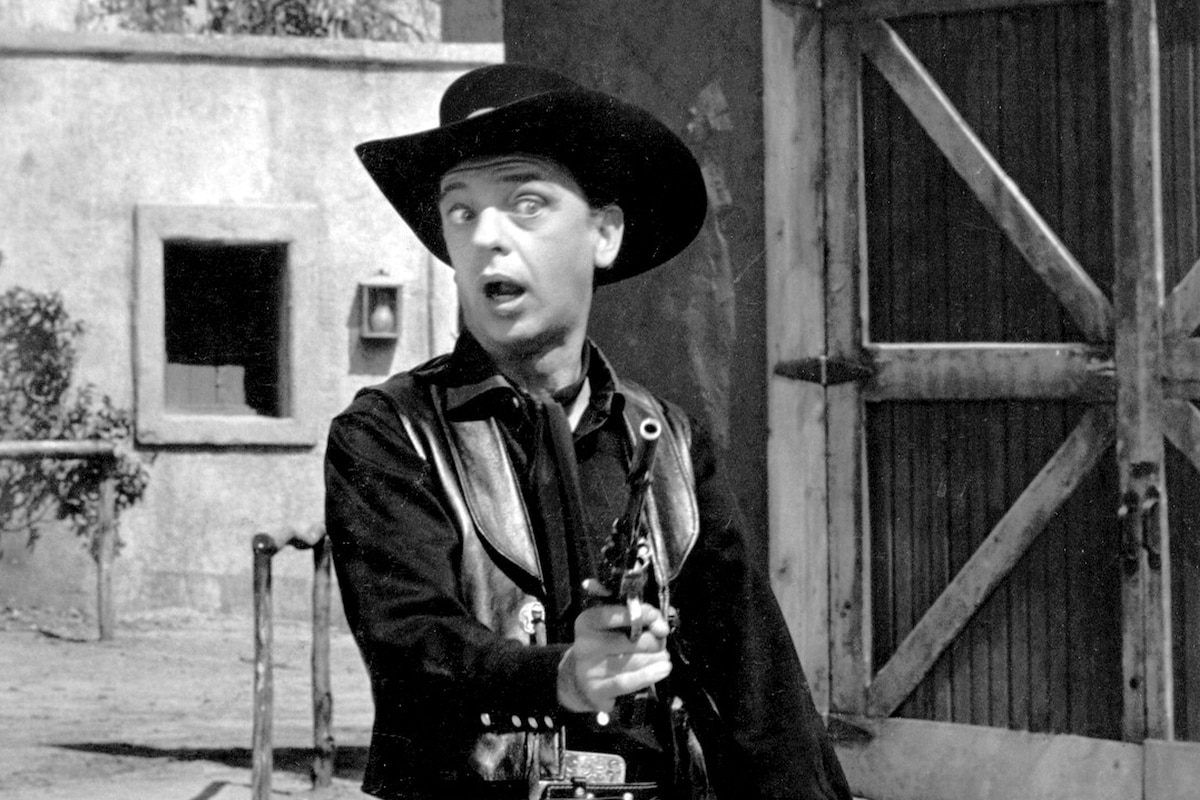
At the peak of his fame on television, Don Knotts left The Andy Griffith show in 1965 to sign a five-picture deal with Universal. Barney Fife had made him a national icon, and audiences were more than willing to follow his sweet-hearted goofiness to the big screen. The Shakiest Gun in the West (1968) was the third film in the contract (after The Ghost and Mr. Chicken [1966] and The Reluctant Astronaut [1967]), a remake of the Bob Hope comedy The Paleface (1948). Written by his regular collaborators Jim Fritzell and Everett Greenbaum, it plops Knotts into the 19th century, playing a mild-mannered and painfully clumsy dentist named Jesse Heywood who sets up a practice on the frontier. On the journey over, his stagecoach is robbed by masked bandits, including one Penelope Cushings (Barbara Rhoades). Heywood falls for Cushings’ voluptuous charms, not knowing that she is now working undercover for the sheriff in order to clear her record. She is also taking his shots for him – Heywood’s growing reputation as a fearsome gunman is a sham, all due to Penelope shooting from afar. The Shakiest Gun in the West is a showcase for Knotts’ broad physical comedy, his rubber face expanding and contracting like an accordion as he stumbles his way through the American West. The film unfortunately features problematic and offensive characterizations of Native Americans when viewed from a contemporary perspective.
by R. Emmett Sweeney
