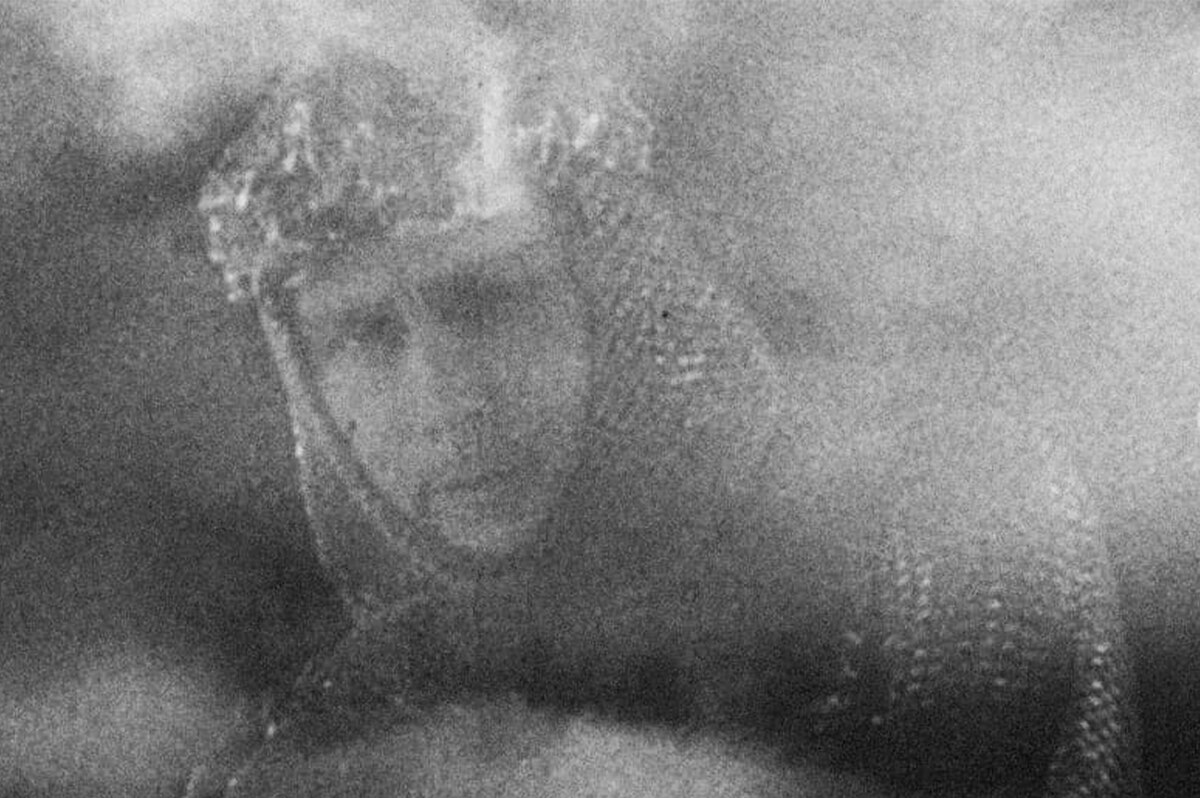
Marie-Louise Iribe's classical fantasy Le roi des aulnes, aka The Erl King (1931) can boast a refined literary pedigree. The early French talkie is based on an eerie poem by Goethe, itself derived from Scandinavian tales that had been revisited many times in musical form, most notably by Franz Schubert. The poem sketches the tragedy of a man taking his ailing son through dark woods. The boy describes the approach of Death in the person of the Erl King, a demonic elf that claims children that venture into the forest.
An early French talking picture with little dialogue, The Erl King expands on the slight poem by adding new characters and a fairyland gathering in the forest, complete with ethereal dancing nymphs similar to those in Hollywood's A Midsummer Night's Dream (1935). The fanciful visions were created by the visual effects master W. Percy Day. The concerned father is played by Otto Gebühr, noted for his role as the Emperor in the 1920 expressionist classic The Golem.
Marie-Louise Iribe had been an actress since 1912 and played in Jacques Feyder's classic L'Atlantide (1921). Born Pauline Marie-Louise Lavoisot, she took the name of her uncle Paul Iribe, a famed designer, fashion great and publisher who is credited as a major influence on the Art Deco style. Paul Iribe spent six years in Hollywood doing costumes and design for George Fitzmaurice and Cecil B. DeMille before returning to France. He created the costumes and overall design for his niece's haunting movie.
The Erl King was also released in a German-language version. Its dreamlike glimpse of the afterlife fits nicely with Fritz Lang's Destiny (1921) and Roberto Gavaldón's Macario (1960). Ms. Iribe might have gone on to direct more films had she not passed away in 1934, at only 39 years of age.
by Glenn Erickson
