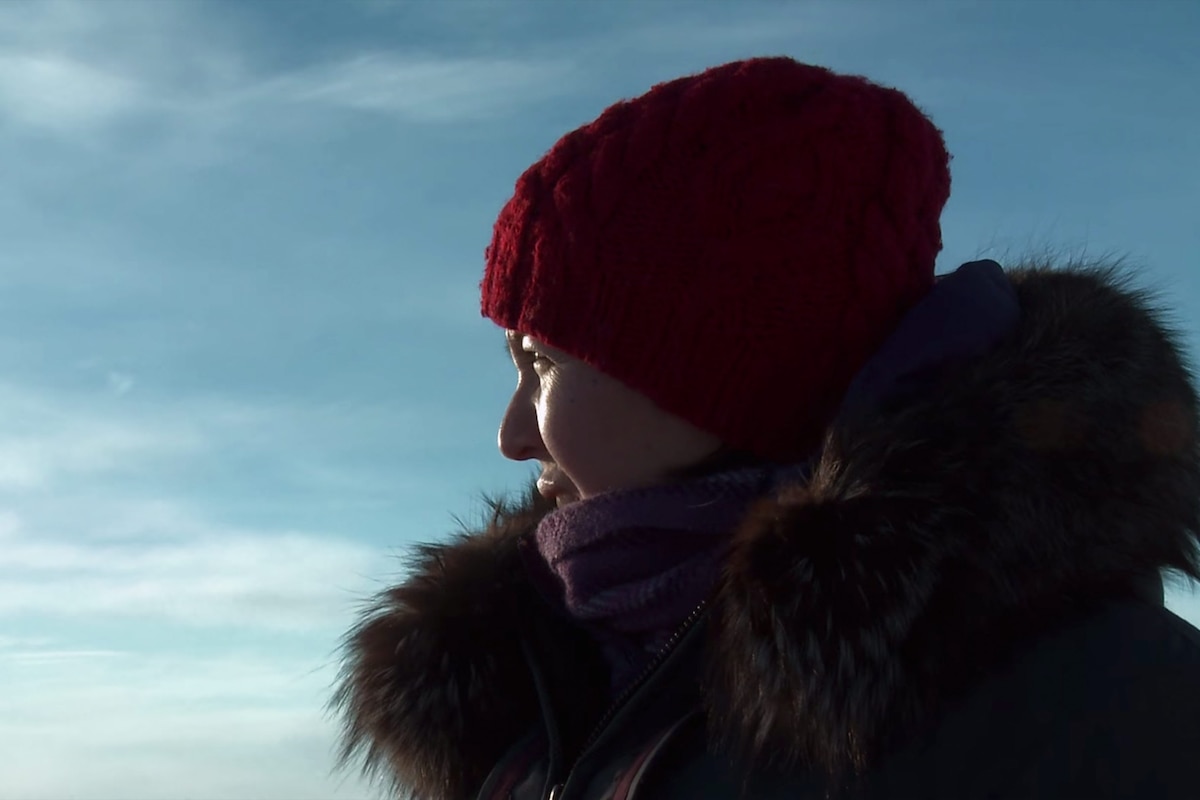
We've all seen news images of Brigitte Bardot hugging fluffy harp seal pups; the eco-political forces of PETA and Greenpeace have long used anti-seal hunting publicity as a major fundraising tool. But the issue is in no way that simple, as is boldly asserted in an activist documentary by Alethea Arnaquq-Baril, an Inuit filmmaker whose remarkable body of work promotes Inuit life and helps to preserve its culture.
As abundantly proven in Angry Inuk (2016), the ban on non-subsistence seal hunting, along with other Canadian laws, has rendered Inuit communities all but unsustainable. The show argues that seal populations are in no way endangered, and that the anti-fur lobby's emotional campaigns omit the fact that seals are no different than the millions of cows and pigs slaughtered each year. Along with laws restricting some uses of dogs for transportation -- forcing Inuits to buy expensive gasoline -- the ban on commercial seal hunting has destroyed the economies of communities in the far-North territory of Nunavut, such as Arnaqaq-Baril's hometown of Kimmirut.
Angry Inuk explores the negative effects of the economic collapse. Young people leave and the suicide rate is high. The film also explores the way that the Inuits' non-confrontational culture leaves them at a disadvantage when dealing with outsiders and politics in Ottawa. The most convincing part of the documentary details the way that humane societies like PETA refuse to engage with opposing viewpoints. They continue to characterize seal hunting as barbaric, atrocious -- and a fact-proof fundraising tool.
Alethea Arnaquq-Baril's films have won prestigious awards. An earlier short subject Aviliaq: Entwined (2014) examines the pros and cons of multiple spouse relationships in Inuit culture, a practice that was brought to a halt in the 1950s. Her next film The Grizzlies (2018) is about a sports team created to combat youth suicide in Nunavut Territory.
by Glenn Erickson
