In these turbulent times, we feel our viewers deserve a bit of escapist fare that will perhaps lighten our collective load and lift spirits. So, we have assembled a collection of upbeat films to brighten each Wednesday night in July, co-presented by all of our TCM hosts: Dave Karger, Alicia Malone, Jacqueline Stewart, Eddie Muller and Ben Mankiewicz.
These ebullient movies are broken into categories beginning with Toe Tappers. In this category is a series of musical treats inclduing Seven Brides for Seven Brothers (1954), one of MGM's most original and rambunctious productions of that golden decade for musicals, the 1950s. Jane Powell and Howard Keel star, and Russ Tamblyn is a standout among the brothers wanting to get hitched in 1850s Oregon. Directed by Stanley Donen, the movie won an Oscar for its musical scoring.
Annie (1982), the screen version of the Broadway musical based on the "Little Orphan Annie" comic strip, had some hard knocks during its original theatrical run, when it did not win rave reviews or prove to be a big hit. But the movie, starring Aileen Quinn as Annie, spread happiness among younger viewers on home video and beyond. This is director John Huston's only musical, and he draws bravura performances from Albert Finney, Carol Burnett, Bernadette Peters and Tim Curry.
Other tip-top Toe Tappers in our Spotlight: Top Hat (1935), Singin' in the Rain (1952) and Gigi (1958).
A Good Laugh is the order of the day in Bringing Up Baby (1938), one of the quintessential screwball comedies of the 1930s. Cary Grant plays a paleontologist who is harassed by a delirious heiress (Katharine Hepburn) and a leopard named Baby. Howard Hawks directs, and the cast also includes Barry Fitzgerald and Charles Ruggles.
Harvey (1950) boasts a classic comic performance from Oscar nominee James Stewart as Elwood P. Dowd, the gentle soul who believes he communicates with the character of the title, an invisible giant rabbit. Henry Koster directs a choice cast that also includes Oscar winner Josephine Hull, Wallace Ford and Peggy Dow.
Also providing A Good Laugh are A Night at the Opera (1935), Mr. Deeds Goes to Town (1936), Ninotchka (1939) and The Producers (1967).
Family Ties are delightfully explored in Life with Father (1947), the charming film adaptation of the play developed from the Clarence Day memoir about the domestic life of a financier in 1880s New York City. William Powell was Oscar-nominated for his expert performance as this blustering father, who doesn't quite realize that his wife (Irene Dunne) and children are running circles around him. Michael Curtiz directs an appealing cast that also includes Edmund Gwenn, Zasu Pitts and the lovely young Elizabeth Taylor.
Oscar-nominee Rosalind Russell gives one of the screen's most extravagant comedy performances in Auntie Mame (1958), adapted from the play and Patrick Dennis's memoir about his glamorously eccentric relative. Morton DaCosta directed and Coral Browne, Forrest Tucker and Oscar-nominated Peggy Cass contribute other wonderfully over-the-top comic turns.
More Family Ties are tightened or unraveled in Andy Hardy Gets Spring Fever (1939), On Moonlight Bay (1951), The Man Who Came to Dinner (1942) and Meet Me in St. Louis (1944).
Lighthearted Love is examined in The Shop Around the Corner (1940), with the charming team of Margaret Sullavan and James Stewart as a couple who can't stand each other in real life but unwittingly fall in love as pen pals. Ernst Lubitsch lends his inimitable directorial touch and Frank Morgan costars.
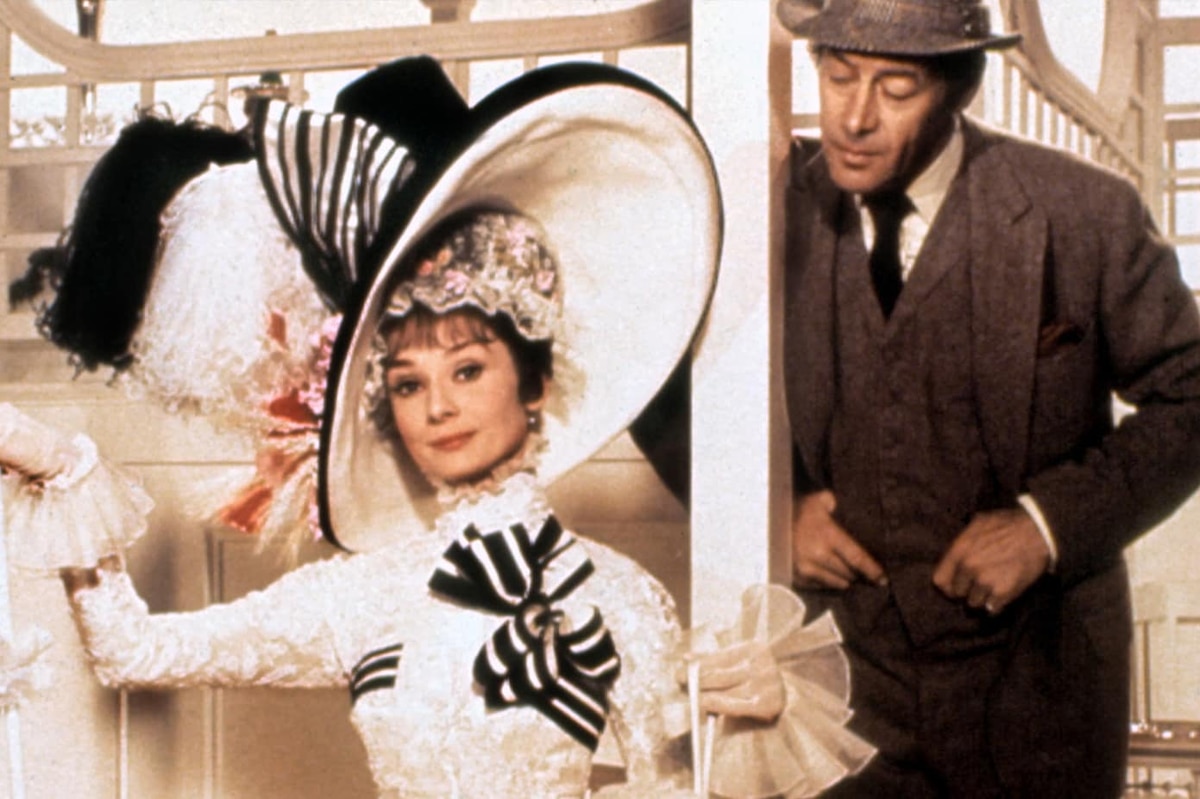
My Fair Lady (1964), the sumptuous film version of the Lerner-and-Loewe musical adapted from George Bernard Shaw's Pygmalion, allows Rex Harrison to recreate his stage performance as Henry Higgins to Oscar-winning effect. It also permits Audrey Hepburn to create her own exquisite and endearing Eliza Doolittle. The movie won a total of eight Oscars including Best Picture and Director (George Cukor). Supporting actors Stanley Holloway and Gladys Cooper also were nominated.
More Lighthearted Love is provided by It Happened One Night (1934), His Girl Friday (1940) and Sunday in New York (1963).
Good Time Crime bubbles up in Arsenic and Old Lace (1944), based on the madcap play by Joseph Kesselring about aging spinster sisters (Josephine Hull and Jean Adair) who poison old bachelors to end their loneliness. Cary Grant stars as the nephew forced to deal with his aunts' misdeeds, and the delightful supporting cast includes Raymond Massey, Peter Lorre, Priscilla Lane, Jack Carson and John Alexander. Frank Capra directs with a comedy master's touch.
Guys and Dolls (1955) boasts "The Oldest Established Floating Crap Game in New York," according to one of the songs in its great Frank Loesser score. This movie version of the classic Broadway musical, based on Damon Runyon characters, sports unconventional choices in its romantic leads. Marlon Brando and Jean Simmons weren't known for their singing and dancing, but their performances are charming (with Simmons winning a Golden Globe), and second leads Frank Sinatra and Vivian Blaine were completely in their element. The lively direction is by Joseph L. Mankiewicz, another name not noted for musicals.
For more Good Time Crime, check out The Thin Man (1934), The Lady Eve (1941) and Some Like It Hot (1959).
by Roger Fristoe
Feel-Good Films - Wednesdays in July
by Roger Fristoe | June 18, 2020
SIGN UP FOR OUR NEWSLETTERS

CONNECT WITH TCM