Directed by Jean Negulesco - 4/30
Jean Negulesco was a former painter turned Hollywood director who moved to the US in 1927 and
began his film career as a sketch artist for title designs and montage sequences. Negulesco later
worked as an assistant producer, second unit director and co-screenwriter before making his first
directorial effort, "Singapore Woman", in 1941. Negulesco did some of his finest directing for
Warner Bros. in the 1940s, showing a flair for polished melodrama and film noir as in The
Conspirators (1944) and Nobody Lives Forever (1946) with John Garfield. The complexly
plotted The Mask of Dimitrios (1944) was an admirable showcase for a debuting Zachary
Scott and the Warner Bros. stock company, while "Three Strangers" (1946) brought together the
formidable trio of Peter Lorre, Sydney Greenstreet and Geraldine Fitzgerald in an unusual tale of
cross and double-cross. Negulesco's talents for showcasing his female stars was confirmed with
the Joan Crawford romantic melodrama Humoresque (1946), the touching Ida Lupino vehicle,
"Deep Valley" (1947) and the admirably adult "Johnny Belinda" (1948) in which Jane Wyman gave a
memorable Oscar®-winning performance as a deaf-mute rape victim.
Negulesco moved to 20th Century-Fox later in 1948, and his first film there, "Road House", was consistent with his earlier work. A standardly plotted noir, it nonetheless brought together the formidable starring quartet of Lupino, Richard Widmark, Cornel Wilde and Celeste Holm and came to an explosive finale. Negulesco also did quite well with the restrained wartime women prisoner saga "Three Came Home" (1950), spotlighting Claudette Colbert and Sessue Hayakawa, and with the unjustly neglected "Take Care of My Little Girl" (1951). As his tenure at Fox progressed, Negulesco continued to deliver glossy star vehicles featuring handsome visuals, but the plotting was more often routine and the cumulative narrative drive less gripping.
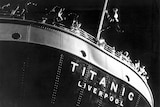
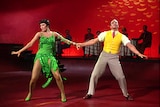
Negulesco continued to show a tendency toward all-star films about groups of three or four people, but the emphasis shifted from displaying group interactions to telling their separate stories. The entertaining if insubstantial comedy "How to Marry a Millionaire" (1953), with Betty Grable, Lauren Bacall and Marilyn Monroe, was typical in this respect, and the historical recreation "Titanic" (1953), proved to be one of his better films from this period. One of Negulesco's best-remembered films, "Three Coins in the Fountain" (1954), extremely popular in its day and critically fairly well received, continued in this vein as three women found romance in an Italy so handsomely photographed that the film's travelogue style took precedence over its dramatic thrust. "Women's World" (1954) came back to the states as three wives jockeyed to get their husbands an important promotion; the surface glamour was there, but little else of note remained. Daddy Long Legs (1955) was an overlong but nonetheless warmly appealing for the acting of Fred Astaire and Leslie Caron, if not their dancing. "Boy on a Dolphin" (1957), meanwhile, only revamped Negulesco's tourist guide sheen and "The Best of Everything" (1959) brought together yet another trio of upwardly mobile working women in an undistinguished if watchable manner.
Negulesco made a handful of films during the 60s of little note and later dabbled in art collecting and real estate. If in retrospect his career seems to have been swamped by increasingly vapid, star-heavy glamourfests, he nevertheless helmed a number of very fine films and proved himself a reliable and talented purveyor of smooth entertainment.
* Films in Bold Type will air on TCM
Biographical information provided by TCMdb
Negulesco moved to 20th Century-Fox later in 1948, and his first film there, "Road House", was consistent with his earlier work. A standardly plotted noir, it nonetheless brought together the formidable starring quartet of Lupino, Richard Widmark, Cornel Wilde and Celeste Holm and came to an explosive finale. Negulesco also did quite well with the restrained wartime women prisoner saga "Three Came Home" (1950), spotlighting Claudette Colbert and Sessue Hayakawa, and with the unjustly neglected "Take Care of My Little Girl" (1951). As his tenure at Fox progressed, Negulesco continued to deliver glossy star vehicles featuring handsome visuals, but the plotting was more often routine and the cumulative narrative drive less gripping.
Negulesco continued to show a tendency toward all-star films about groups of three or four people, but the emphasis shifted from displaying group interactions to telling their separate stories. The entertaining if insubstantial comedy "How to Marry a Millionaire" (1953), with Betty Grable, Lauren Bacall and Marilyn Monroe, was typical in this respect, and the historical recreation "Titanic" (1953), proved to be one of his better films from this period. One of Negulesco's best-remembered films, "Three Coins in the Fountain" (1954), extremely popular in its day and critically fairly well received, continued in this vein as three women found romance in an Italy so handsomely photographed that the film's travelogue style took precedence over its dramatic thrust. "Women's World" (1954) came back to the states as three wives jockeyed to get their husbands an important promotion; the surface glamour was there, but little else of note remained. Daddy Long Legs (1955) was an overlong but nonetheless warmly appealing for the acting of Fred Astaire and Leslie Caron, if not their dancing. "Boy on a Dolphin" (1957), meanwhile, only revamped Negulesco's tourist guide sheen and "The Best of Everything" (1959) brought together yet another trio of upwardly mobile working women in an undistinguished if watchable manner.
Negulesco made a handful of films during the 60s of little note and later dabbled in art collecting and real estate. If in retrospect his career seems to have been swamped by increasingly vapid, star-heavy glamourfests, he nevertheless helmed a number of very fine films and proved himself a reliable and talented purveyor of smooth entertainment.
* Films in Bold Type will air on TCM
Biographical information provided by TCMdb


TCM Shopping